SignalIngested.
Identity, cloud, threat, financial and data signals enter one operational context.
 BasyrixRequest access ↗
AI-native decision infrastructure
Basyrix turns fragmented signals across SecOps, FinOps, DataOps and GovernanceOps into explainable, policy-driven action.
From raw event to defensible action
Identity, cloud, threat, financial and data signals enter one operational context.
Controls, risk tolerance and delegated authority shape the next permitted action.
Automation moves at machine speed while material decisions stay inside accountable limits.
Every input, reason, authority and outcome remains legible after the decision is complete.
00 The category thesis
Every automated action should answer five questions: what triggered it, what policy permitted it, who held authority, what happened next—and what evidence remains.
Correlate the signals that change the decision, not every signal you can collect.
Make autonomous scope explicit and put material decisions in accountable hands.
Leave a legible chain from input to outcome for operators, auditors and customers.
01 The platform
Most operations platforms stop at visibility. Basyrix goes further: it turns context into a governed decision, then makes the reason, authority and evidence visible.
Bring signals from identity, cloud, security, finance and data systems into one decision context.
Signals→Correlate evidence against business policy, risk tolerance and regulatory controls.
Context→Return an explainable allow, review or block decision—with confidence and reason codes.
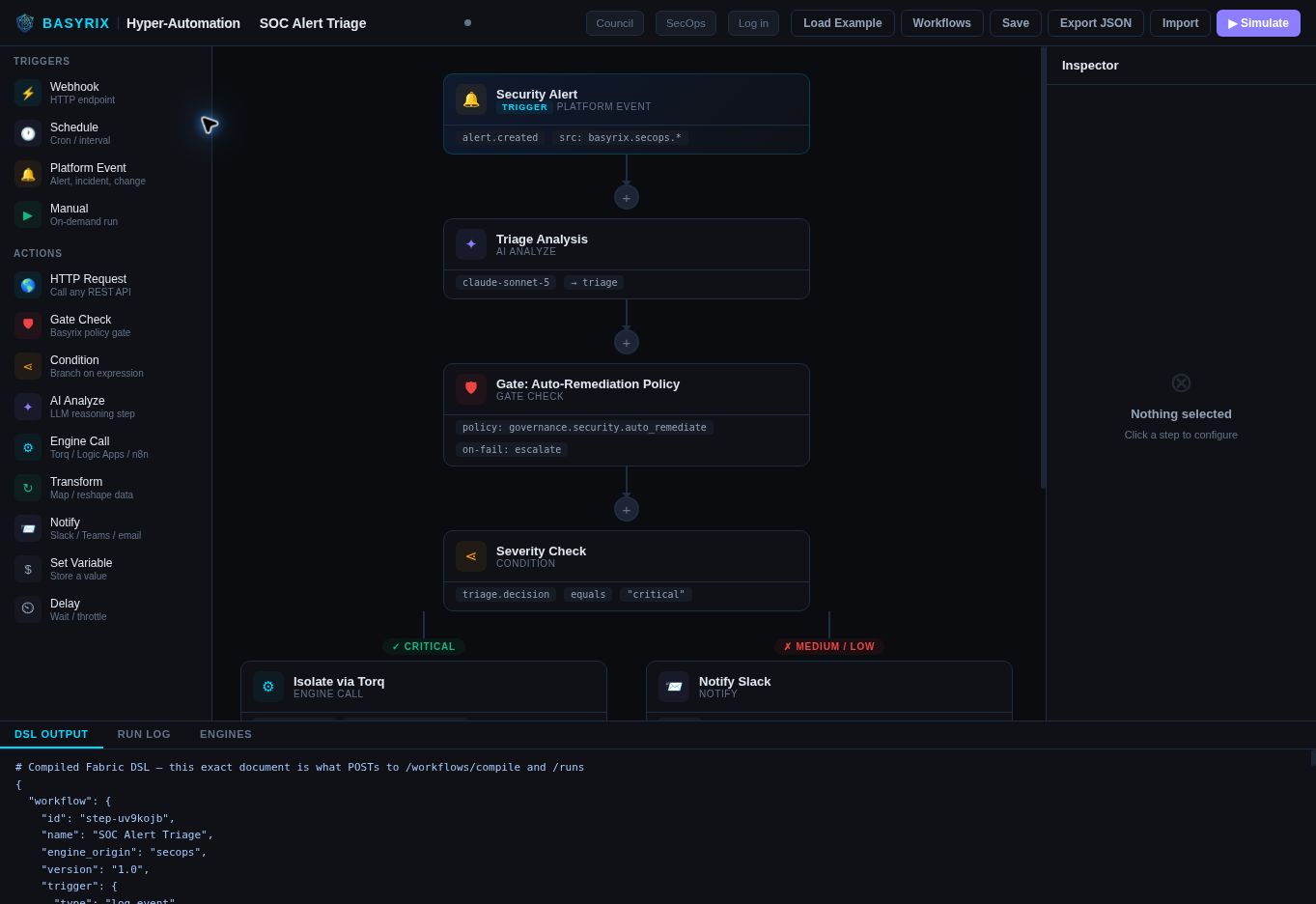
Policy→Trigger the right workflow automatically, or route material decisions to a human authority.
ActionOne control plane Shared policies, evidence and authority across every operational engine.
Any cloud Designed for hybrid, multi-cloud and partner-delivered services from day one.
Human authority Automation moves fast; material decisions still stop in the right hands.
02 The product
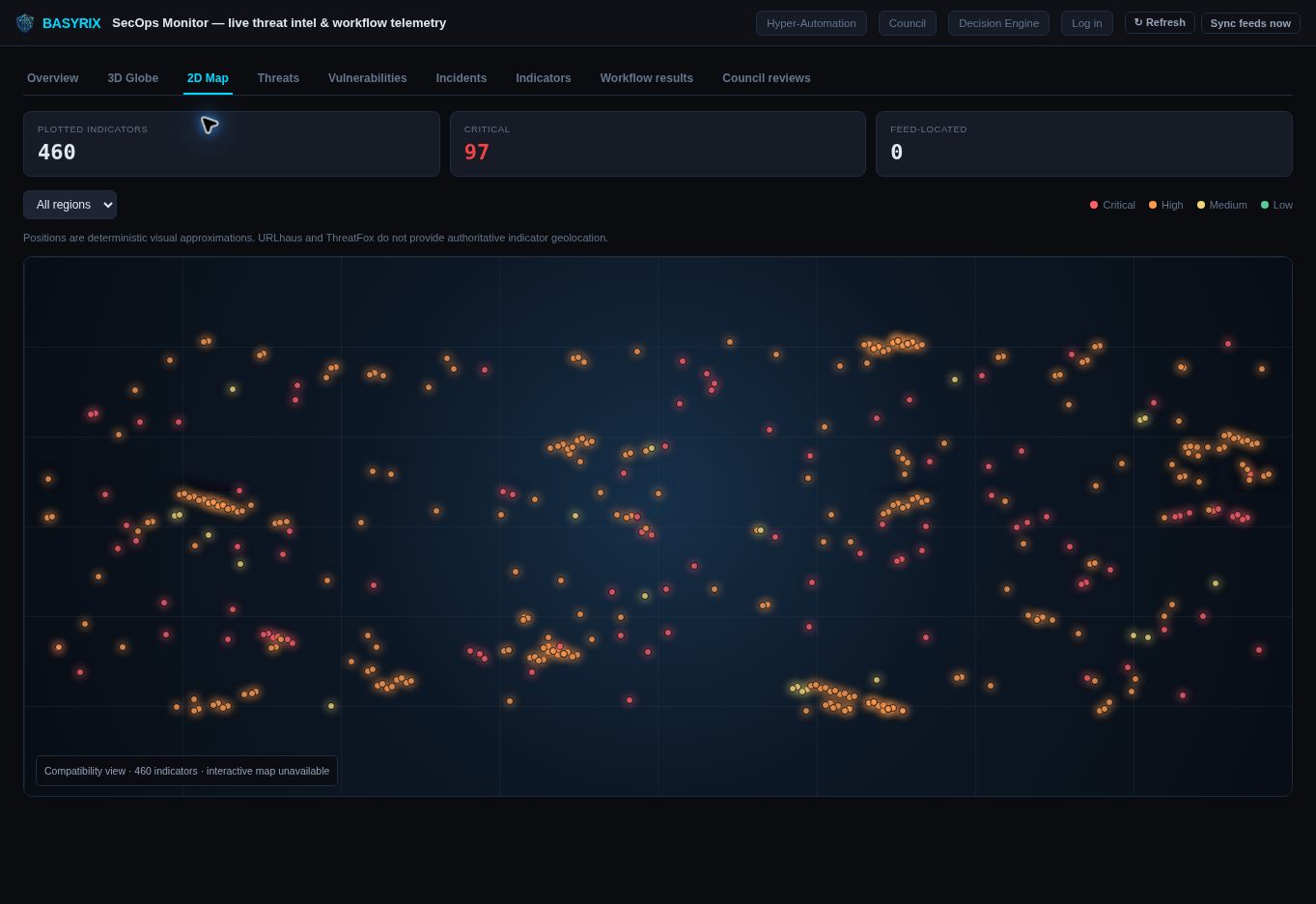
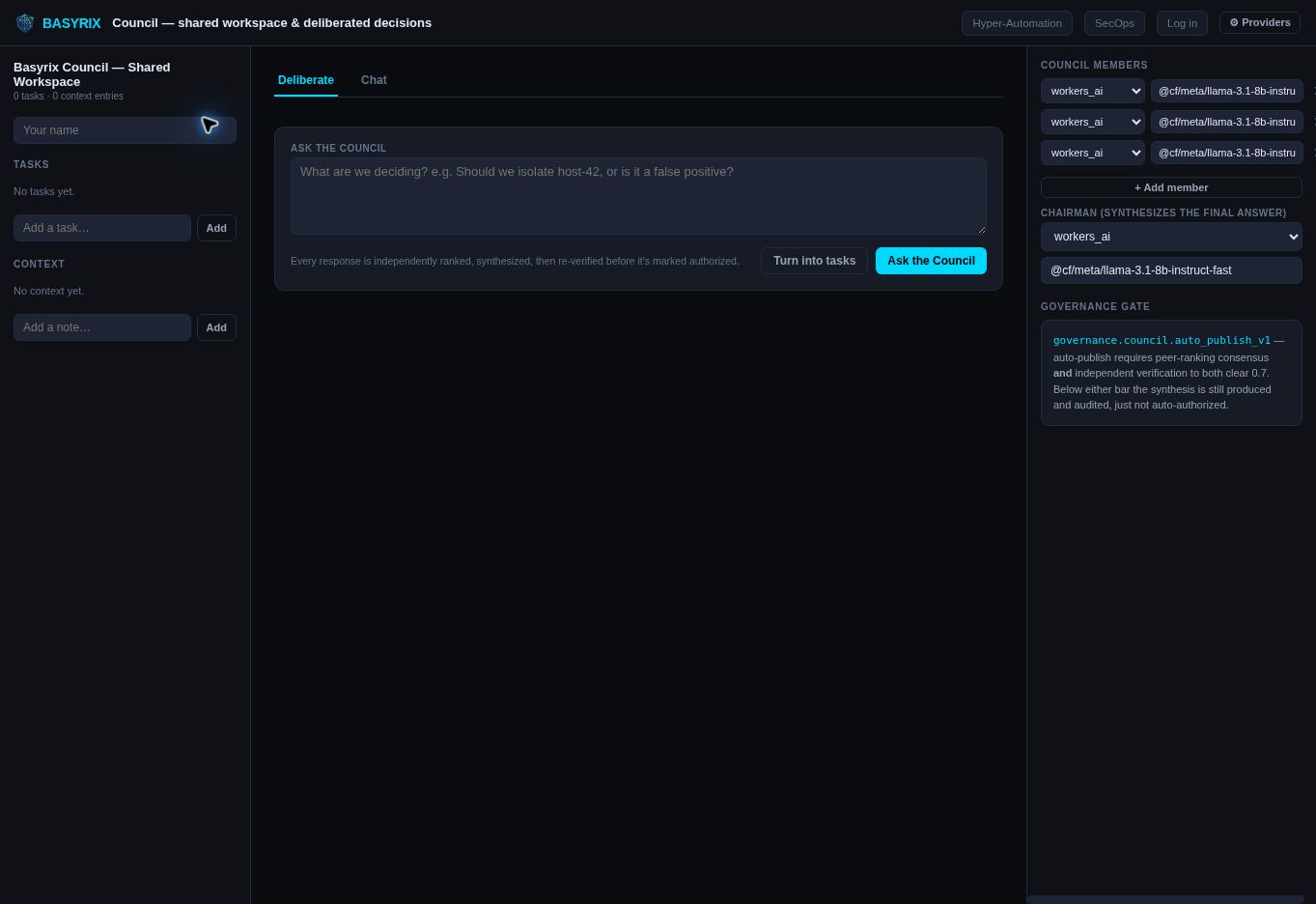
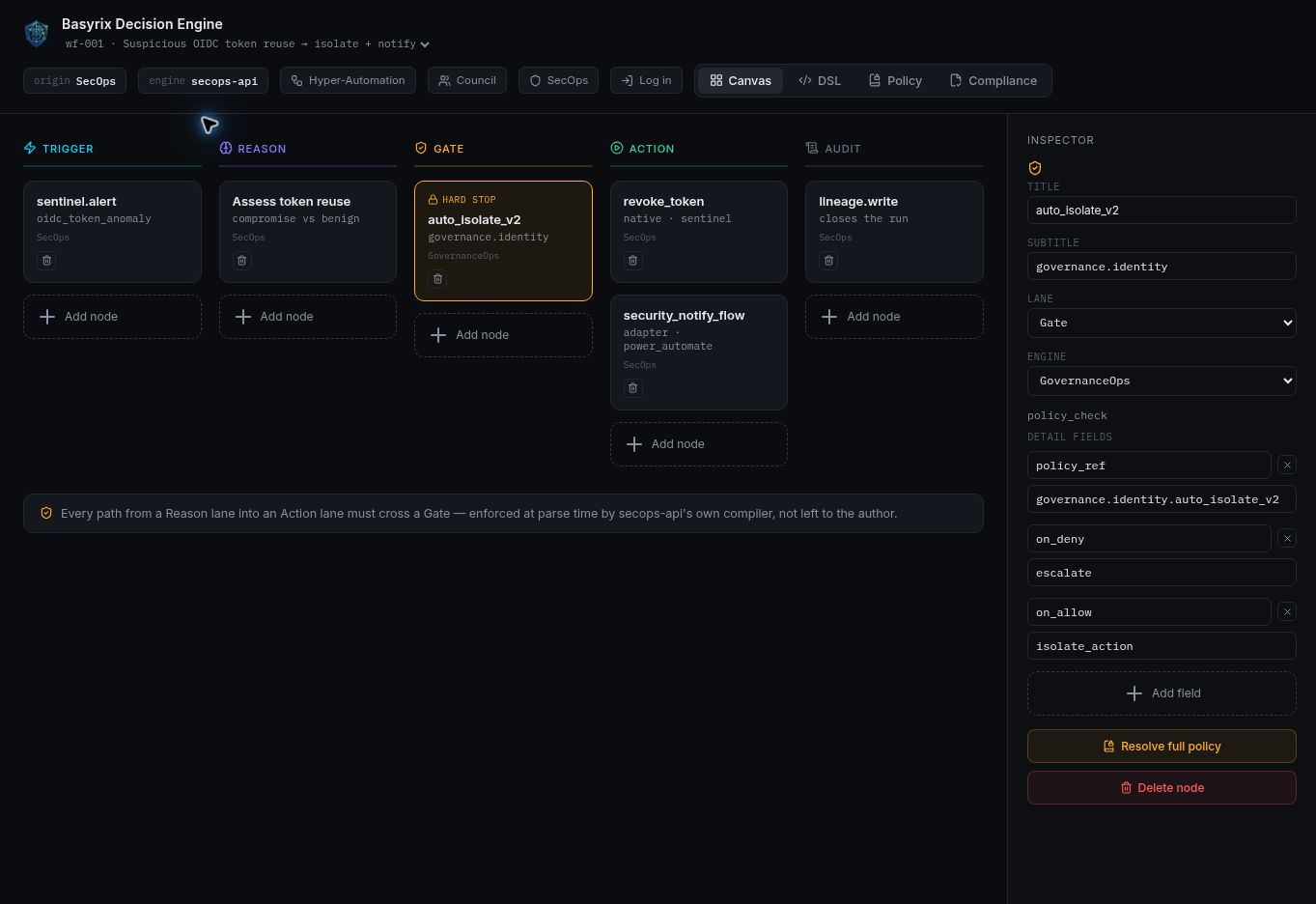
Basyrix gives operators one legible view across live decisions, policy rationale, control coverage and automated action.
Captured from the live Basyrix products on 25 July 2026. Select any screen to open the product itself.
03 Decision engines
Start where decision pressure is highest. Expand without rebuilding governance, evidence or authority for every new domain.
Turn security telemetry into consistent, explainable containment and response decisions.
Continuously decide where workloads and data should run based on cost, risk and performance.
Govern data movement, quality and residency without turning every exception into a committee.
Translate policy into operational controls that every engine can evaluate the same way.
04 Built, not imagined
Basyrix is in active product development. The first engine already covers the security decisions teams face every day—from suspicious authentication to data exfiltration and command-and-control.
Join the design partner programme →05 Trust by design
Every Basyrix decision is designed to carry its inputs, matched policy, authority, outcome and action trail. Speed is useful. Defensible speed is transformative.
sha256: 2f6a…91bcReason codes and matched controls travel with the decision—not in a separate report.
Define exactly what can run automatically and what requires accountable approval.
Designed around isolated identities, sessions, policies and evidence for service delivery.
Use Basyrix as the decision layer behind your existing portals, tooling and workflows.
06 Why Basyrix
Teams do not need another pane of glass. They need a trusted way to turn many systems, competing constraints and growing regulation into the next right action.
Basyrix is being built for operators, service providers and platform teams that need to act across organisational and cloud boundaries—without giving up control.
07 Build with us
We are speaking with founding design partners who want to shape explainable, governed decision infrastructure from the ground up.